Proactively explore new career paths, connect with companies, or express internal ambition with a clear and confident letter of interest. Using a pre-formatted letter template in Microsoft Word, seamlessly show initiative, make a strong first impression, and communicate value with ease. Chat with Copilot in Word to personalize letter templates, strengthen messages, and tailor to each opportunity.
Explore how to write polished, professional letters of interest, with examples and formatting tips with Word online.
When to use a letter of interest
Letters of interest can help build relationships with potential employers and enhance an applicant’s personal brand. Whether seeking an internal transfer or applying for a dream role, here are scenarios where a letter of interest can increase chances of landing a job.
Applying to hidden roles: a well-written letter of interest can be used as an effective introduction to employers when a company is not actively hiring, including unlisted or newly created roles in start-ups. Make sure to draft the letter using document editor to improve grammar, correct spelling, and refine tone.
Following up on missed roles: reconnect with a company after applying or show initiative for a role where timelines were not clear with a formal letter. Work with AI writer to build a document that restates interest and provides a clear, easy-to-review snapshot of relevant experience.
Securing roles via networking: make the most out of a networking event by positioning a letter of interest as a follow-up after an in-person conversation. Students can utilize this approach to continue internship discussions, while professionals can reiterate interest in seeking a voluntary role for non-profits.
How to write a letter of interest — formatting and drafting tips
Address the letter to a specific person
Clearly specify who the letter is written to, ensuring it rightly reaches the decision-maker. Using a professional greeting like ‘Dear Hiring Manager’ is a widely used and appropriate way to reach out to a point of contact at a company.
Open with a clear reason
State the exact aim of the letter, instead of giving a top-level overview. Define which department and what role if applying internally, reference in-person conversations if requesting an informational interview, or support ideas with evident results if pitching for a new role.
Highlight relevant skills and experience
Use AI summarizer to effectively document career highlights using short, impactful sentences. Presenting skills and experience in an easy-to-review format enables hiring managers to understand career history better and keep applicants top-of-mind.
Showcase alignment with a company’s core values
In a concise paragraph, describe how the above-mentioned skills fit the company’s vision and goals. Articulate aspects of the business that you admire and how that drives the intention behind the application.
Close with a professional sign-off
Express gratitude to the hiring manager for reviewing the application with a brief, formal thank you note, including next steps for connecting via phone or email. Track word count to keep letters sharp and efficient, while working with AI rewriter to maintain a positive tone.
How to use a letter of interest template in Word
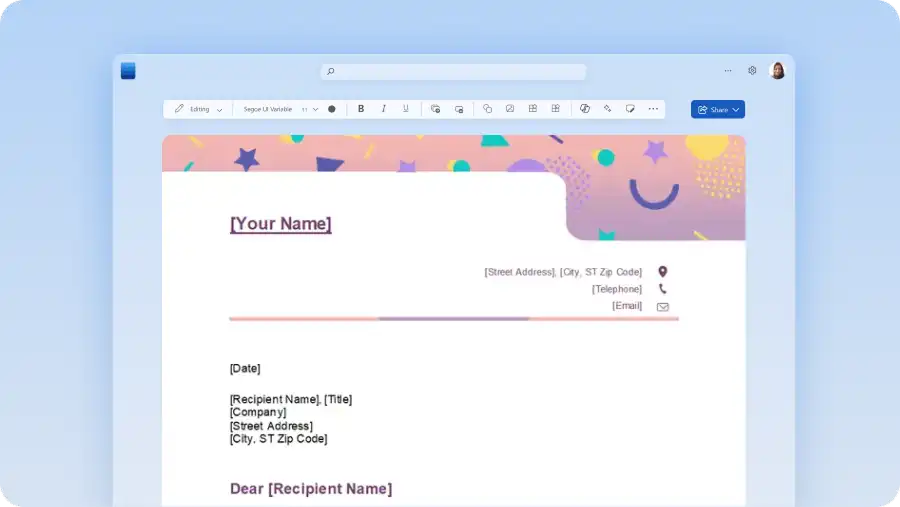
Draft a well-written letter of interest within minutes using fully customizable letter templates in Microsoft Word. Follow these easy steps to create a letter and get started on an application.
In a browser, explore Word letter of interest templates.
Click on the template that best suits the role type to select.
Replace placeholder text with information such as career highlights, recent achievements, and the intent of the letter.
Use document editor to refine tone, spelling, and grammar.
Save and send the finalized letter of interest as a PDF, .docx file, or as an email attachment via Outlook.
How to draft a letter of interest using AI
Create letters of interest from scratch with Copilot in Word. Provide details about the role as well as skills to showcase, and AI will shape a polished letter to share with hiring managers.
Open a new document in Word for the web.
Click on Copilot in Word to start a new chat.
Provide relevant details like experience, role description, and achievements and ask AI writer to draft the letter.
Review the generated text and chat with Copilot to adjust, refine, or elaborate on any point, if needed.
Save drafts as .docx or PDF, then share as a PDF attachment via email.
Letter of interest vs cover letter
A letter of interest and a cover letter both help an applicant stand out professionally, but they serve very different purposes.
Letter of interest
Shows enthusiasm for joining a company that isn’t actively hiring.
Highlights how an applicant’s skills and background align with the organization’s goals.
Expresses admiration for the company’s mission or industry.
Introduces an applicant as a potential fit for future opportunities.
Opens doors for informational interviews or networking conversations.
Helps hiring managers recall an applicant when new roles become available.
Cover letter
Responds directly to a specific job posting.
Tailors an applicant’s skills and experience to the listed requirements.
Emphasizes measurable achievements relevant to the position.
Complements a resume by adding personal context.
Focuses on why an applicant is a good fit for the role.
Encourages an immediate next step, like an interview or follow-up.
Four letters of interest samples with templates
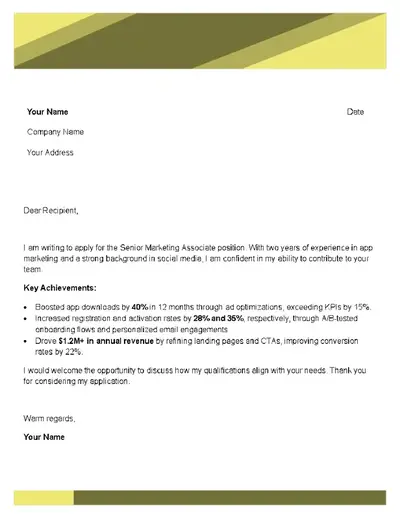
1. Letter of interest for a marketing role
Subject: Interest in future marketing opportunities
Dear Hiring Manager,
I’m reaching out to express my interest in joining your marketing team. I’ve long admired how your brand connects with audiences through data-driven campaigns and creative storytelling. With five years of experience managing digital strategy and analytics, I’ve helped brands grow engagement by over 40% through social media optimization and targeted ad performance.
I’m passionate about crafting meaningful customer experiences and would love to contribute my expertise to future campaigns. I’d appreciate the chance to discuss how my skills align with your upcoming marketing initiatives.
Thank you for your time and consideration.
Best regards, [Your name]
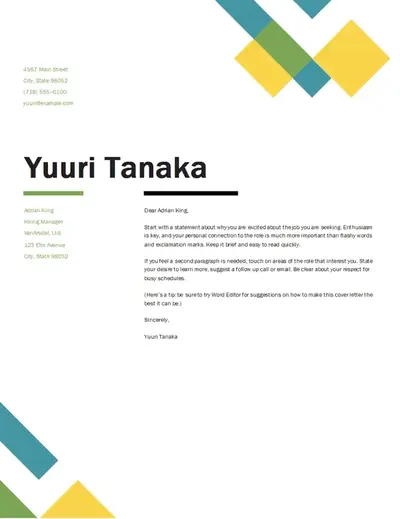
Letter of interest for a teaching position
Subject: Expression of interest – future teaching opportunities
Dear Principal [Last name],
I’m writing to express my interest in future teaching opportunities at [School Name]. As an educator with eight years of classroom experience, I’m passionate about creating a supportive and engaging learning environment that fosters curiosity and growth.
My background includes developing differentiated lesson plans, mentoring new teachers, and integrating technology to enhance learning outcomes. I’m particularly drawn to your school’s focus on project-based learning and community involvement.
I’d welcome the opportunity to discuss how my experience aligns with your school’s mission.
Sincerely, [Your name]
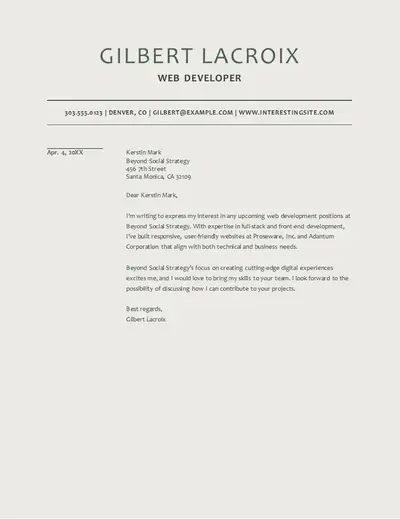
Letter of interest for an IT specialist role
Subject: Interest in upcoming IT specialist roles
Dear Hiring Manager,
I’m reaching out to express my interest in future IT opportunities within your organization. With six years of experience managing network infrastructure and implementing cybersecurity measures, I’m skilled at improving system reliability and reducing downtime across teams.
I’m inspired by your company’s innovation in cloud solutions and would love to bring my technical expertise to support your growing IT operations. I’d be glad to connect to discuss how I can contribute to your technology goals.
Kind regards, [Your name]
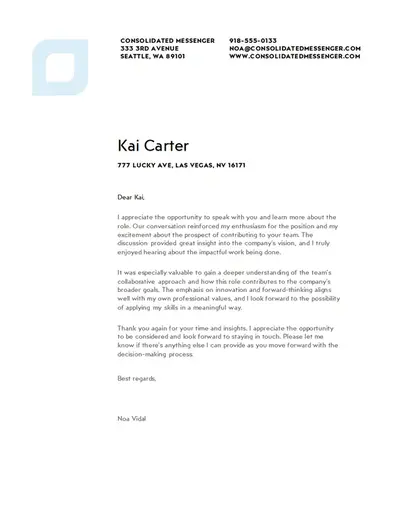
Letter of interest for an executive assistant role
Subject: Interest in forthcoming executive assistant opportunities
Dear Hiring Manager,
I’m writing to express my interest in future Executive Assistant roles within your organization. With several years of experience supporting senior leaders, managing complex schedules, and coordinating priorities across teams, I bring a strong ability to keep operations running efficiently and smoothly.
I’m drawn to your organization's focus on collaboration and growth, and I’d welcome the opportunity to contribute my organizational skills, discretion, and proactive approach to executive support. I would be delighted to connect and discuss how I could add value to your leadership team.
Kind regards, [Your name]
Effortlessly create letters of interest to demonstrate passion for a cause or industry. Find editable templates in Microsoft Word to tailor letters for specific roles and make a strong impression on hiring managers. Explore business plans and recommendation letters to draft other professional documents seamlessly.
Frequently asked questions
- How to send a letter of interest inside a current organization?
Identify the role and hiring manager, then write a brief letter explaining the role of interest and how current skills align with it. Submit the letter through the appropriate internal channel, such as an internal job portal or email, following company guidelines. Work with AI writer to draft a letter that highlights transferable skills and relevant experience, to present an impressive application to managers.
- How long should a letter of interest be?
A letter of interest should be a brief one-page document consisting of three to four paragraphs outlining the interest for the role and the value you will bring to the organization. Use word counter to keep length in check and draft a concise, professional letter that leaves a lasting impression in a short amount of time.
- What are common mistakes to avoid when writing a letter of interest?
Mistakes to avoid include sending letters that are too general, do not reference a specific team, role, or opportunity, and are lengthy. Errors in spelling, grammar, or tone can also distract the reader from the text in focus. Make it a practice to use spell and grammar checker to ensure letters are error-free and polished.
- How to write a letter of continued interest?
A letter of continued interest is used to reconnect after a previous interaction, such as an application, interview, or informal discussion. It should reference that context, confirm ongoing interest, and highlight any relevant updates, such as recent work or achievements. Ask Copilot in Word to review copy and remove repetition, so that the letter adds new value rather than restating earlier communication.