Writing and sending a clear resignation letter is a common workplace task, one that needs the right tone and fast turnaround.
Support quick drafting with professional resignation letter templates and explore formal email examples using Microsoft Word. If you’re writing a letter of resignation for the first time, generate tailored copy in seconds with Copilot in Word. Easily adapt prompt-based examples for any case like immediate resignation, early probation exit, or a career change.
Start with a template or learn how to ask Copilot to create a polished resignation message that’s ready to send in Word.
Resignation letter examples for different workplace scenarios
Generate a letter that best aligns with a specific scenario by copying and pasting these prompts into a Copilot chat in Word online.
Simple resignation letter
Professional resignation letter with notice period
Two weeks’ notice resignation letter
Immediate resignation letter example
Resignation letter for personal reasons
Resignation letter for career change
Resignation letter templates for different work arrangements
Resignation during probation period
Use this letter structure to draft a document that showcases gratitude and helps carry forward the professional relationship with the team.
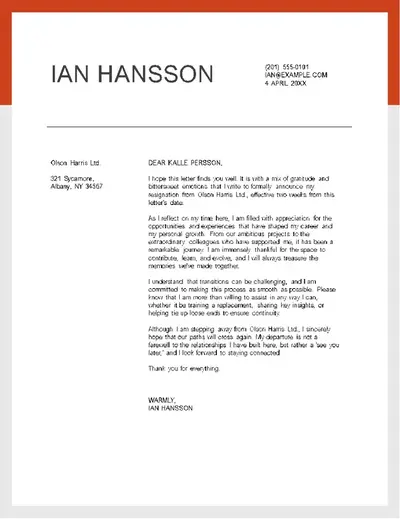
Resignation from a contract position
Express interest in pursuing other ventures, explaining reasons for departure and outlining handover processes, in a clear, brief Word document with this template.
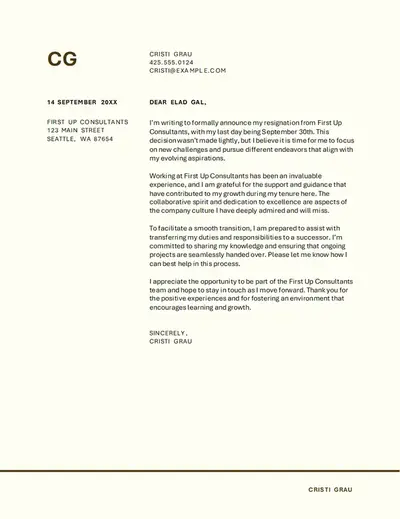
Resignation from a part-time role
This editable template supports resignation from a casual or part-time position to explore full-time roles or other industries.
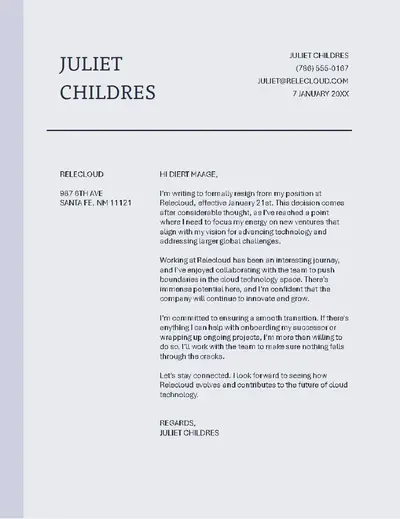
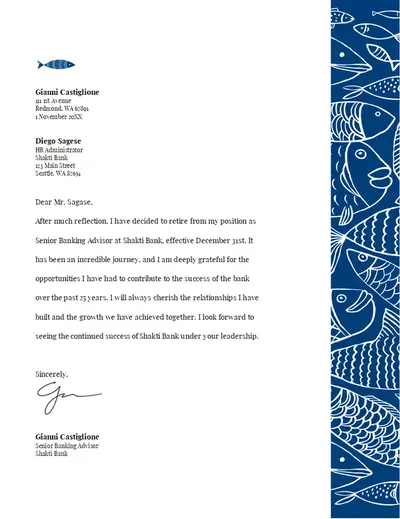
Resignation letter for retirement
Announce retirement from a role in a polite and formal manner, while outlining career highlights, with this easy-to-edit Word template.
What to include in a resignation letter or email
Make sure a resignation letter is articulate and communicative by including these key details in the document structure.
Date and salutation: add the date of writing as well as a recipient for the letter. For example, an immediate senior, a director, or a team manager, depending on workplace hierarchies.
Statement of resignation: respectfully share the main reason for writing the resignation letter. Describe the intent of resigning, whether industry change or pursuing a different role, if required.
Last day of work: specify when the last working day is scheduled to be. Be clear about the notice period duration, outlining that it adheres to both current company policy as well as contractual obligations.
Statement of gratitude: include a brief thank you note for all the opportunities the company has provided, including work-related experiences, training, and professional mentorships.
Next steps and transition details: provide an overview of the handover plan, charting precise timelines as well as the team members involved. Give insights into forthcoming career moves, basis the working relationship with a manager.
Professional sign off: finish the resignation letter with "kind regards", "sincerely", or "thank you". For a sign off, use the full name and title where possible, or a first name in informal workplaces.
How to format a resignation letter
Choose a clear font and size: it’s essential to choose a font that reflects professionalism when creating from scratch. Select size 12 – 14 in Calibri, Aptos, or Arial fonts, as they’re widely recognized in all industries and accessible fonts.
Use correct spacing and margins: for a neat layout, write a letter of resignation inside Word using the ‘normal’ margin setting. The automatic margin leaves one inch at the top, bottom, and sides of the page. Set the line spacing to either one or one point five to avoid text becoming too lengthy. Ask Copilot in Word to run checks and suggest fixes for any formatting errors to prepare a polished draft.
Keep to a one-page length: the resignation letter takes after all other formal documents in terms of length. Depend on word counter to stay within the one-page limit. Use short, scannable paragraphs with limited reasoning to take the reader through the document with precision.
Apply spell checks and proofread: before sharing, proofread letters using spell and grammar checker in Word, while simultaneously refining tone, language, and clarity with document editor.
Export in the correct file format: when a document is ready to export, download as a PDF to either share as an attachment via Outlook or for a high-quality print. Preserve the .docx file in case of any last-minute changes.
Name the resignation letter: if saving a resignation letter to a device or sharing it via a link or email, rename the document appropriately so the HR department can easily identify the letter. An appropriate naming format is yourname_resignationletter_date.
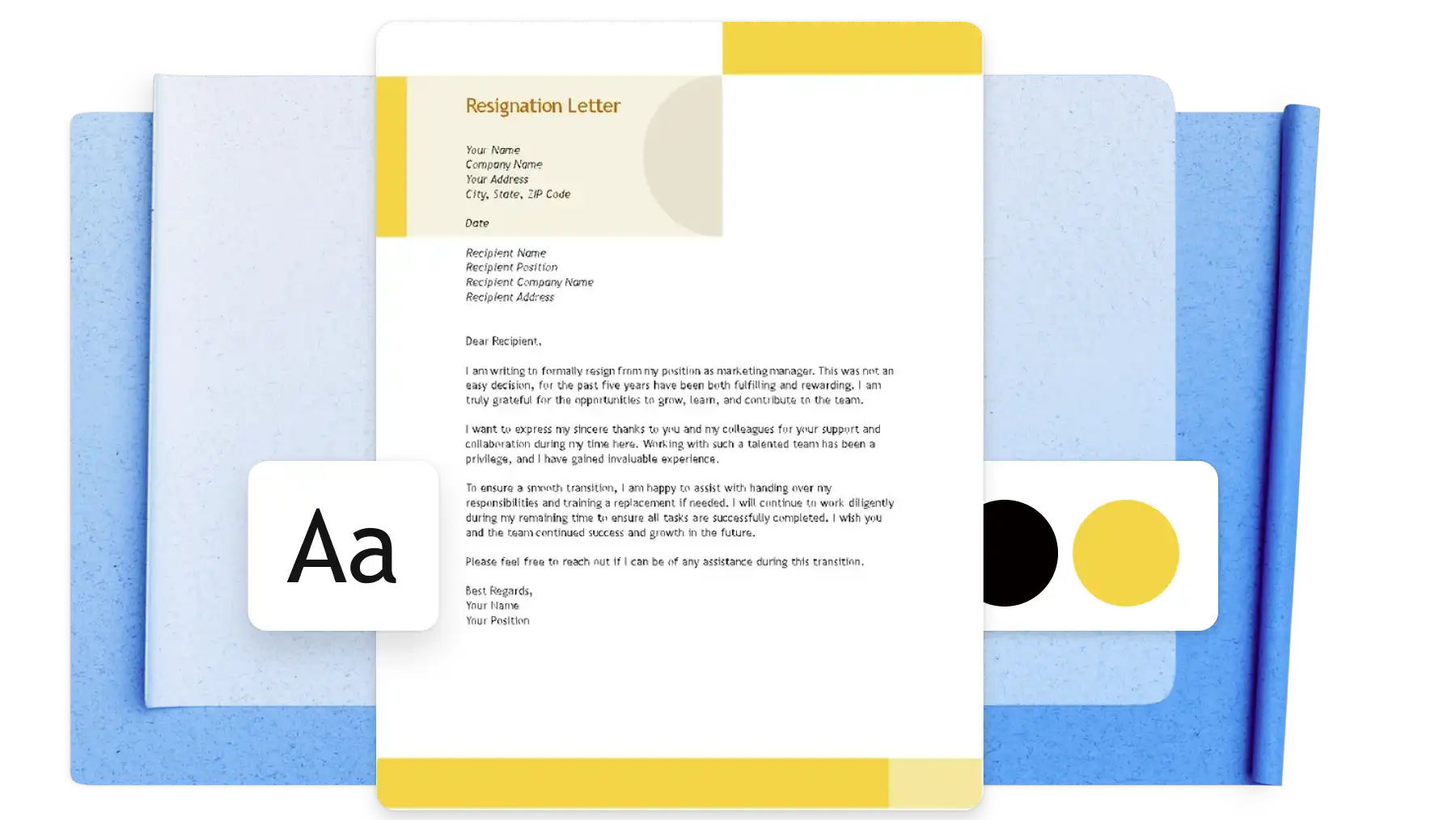
How to write a resignation letter using a template in Microsoft Word
Build a resignation letter with less guesswork by adapting copy-ready templates and sample layouts in Word online. Follow the simple steps below to get started.
In a browser, explore resignation letter templates in Word.
Click on the template that best suits the scenario to select.
Update the template copy with AI writer, wherever required. Add information like reasons for departure, notice period duration, and a thank you note.
Use document editor to improve tone, flow, and language.
Save the final document as a PDF to easily share as an attachment via email.
Resignation letter mistakes to avoid
When sending a resignation letter, it is important to prioritize formal structure, reasoning, and tone. Avoid these common mistakes to ensure letters maintain a high professional standard.
Writing in an emotional tone: approach the letter with a neutral, graceful tone to stay aligned with established workplace etiquette and sustain a professional image throughout.
Detailed reason for resigning: it may be essential to include a brief reason for leaving the current role, but it’s not required to share any details or specifics with the employer. If you would like to share more details, schedule an exit interview or meeting with the manager privately.
Revealing sensitive career or future details: focus on sharing an overview of future plans, including interested industries, job descriptions, or roles, and not specifying confidential details like salary or benefits.
Being ambiguous about the notice period: do not give team members and managers an estimate of the notice period duration, but a well-defined schedule. Unplanned notice periods hamper the transition plan, causing distress to fellow team members.
Using informal language: never use any disrespectful language within a resignation letter. All negative emotional attachments should be omitted from the document.
Criticizing coworkers: refrain from including criticism towards other individuals, co-workers, or peers within the company.
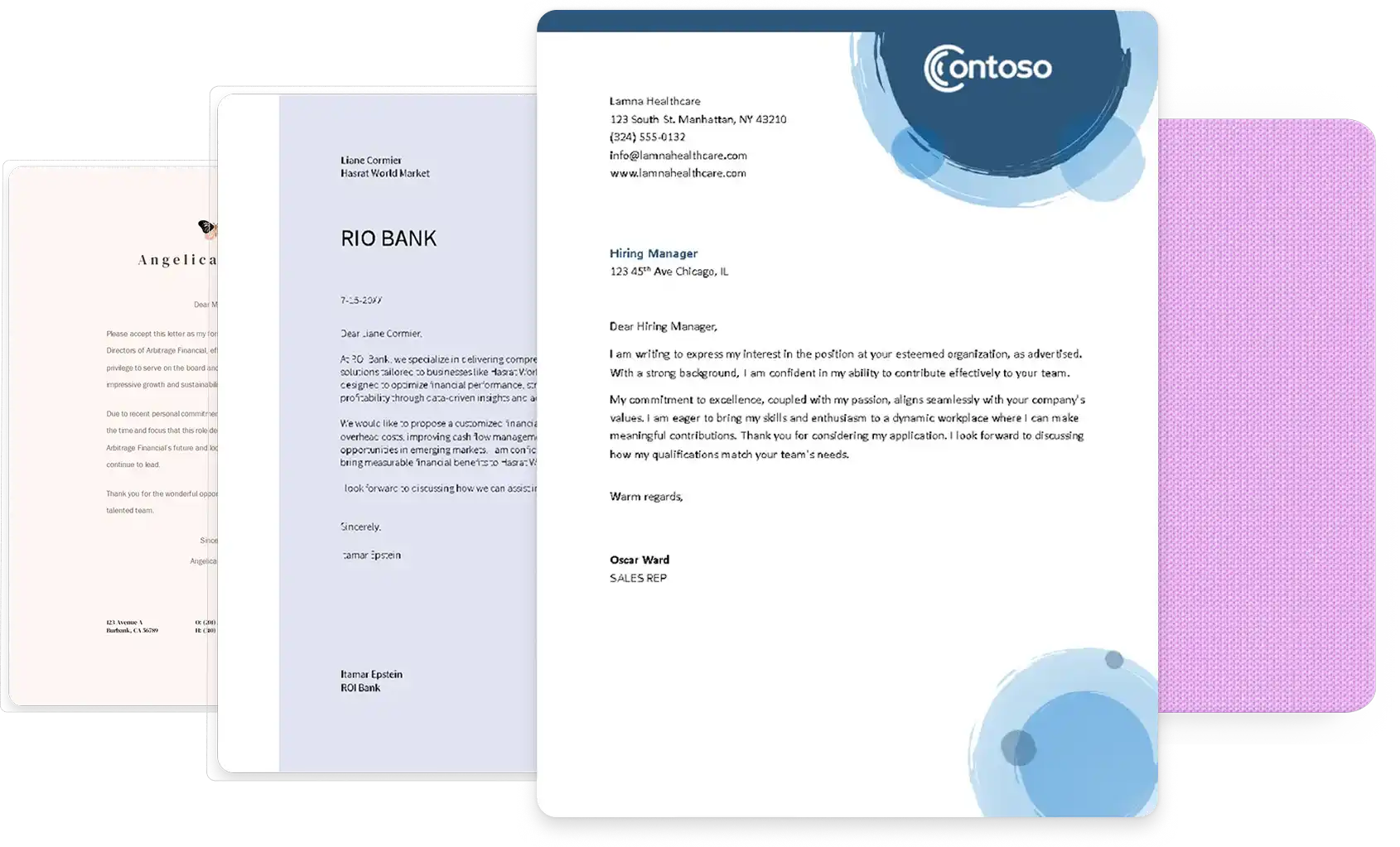
Create an articulate draft on the first attempt using readymade resignation letter templates. Approach the forthcoming task of job searching confidently with effective tips on writing letters of interest and thank you letters in Microsoft Word.
Frequently asked questions
- Does a resignation letter need to include a reason for leaving?
Many workplaces accept a resignation that simply states the intent to resign and confirms the final working day. If a reason needs to be included, use AI writer to draft formal copy in line with company protocols. It is best to keep the reasoning high-level and neutral, such as personal reasons or career change.
- Should a resignation letter be submitted in writing or by email?
In more formal environments, a written letter may be preferred, while email resignations are common in remote or digital first workplaces. In some cases, both are used to ensure the resignation is formally recorded. If submitting via email, save the document as a PDF to preserve formatting and layout.
- Is two weeks’ notice required when resigning?
This notice duration is common in many workplaces, but it is not a universal requirement. Notice periods are usually defined by employment contracts, company policies, or local labor regulations. In some situations, shorter or longer notice periods may apply, including immediate resignation. Find the appropriate wording for different notice periods by asking Copilot in Word to generate relevant resignation letter copy.
- How formal should a resignation letter be?
A resignation letter should use professional and neutral language. The level of formality can reflect the workplace culture, but the message should remain clear, respectful, and free from emotional or informal wording. Ask Copilot in Word to suggest refinements in tone, language, and grammar to ensure the letter is appropriately written.
- Is a resignation letter required for part‑time positions?
A part-time position often does require a resignation letter to inform employers about the departure. While requirements for the type of document needed vary by employer, providing written notice helps confirm the resignation, clarify the final working date, and support accurate recordkeeping regardless of employment type.