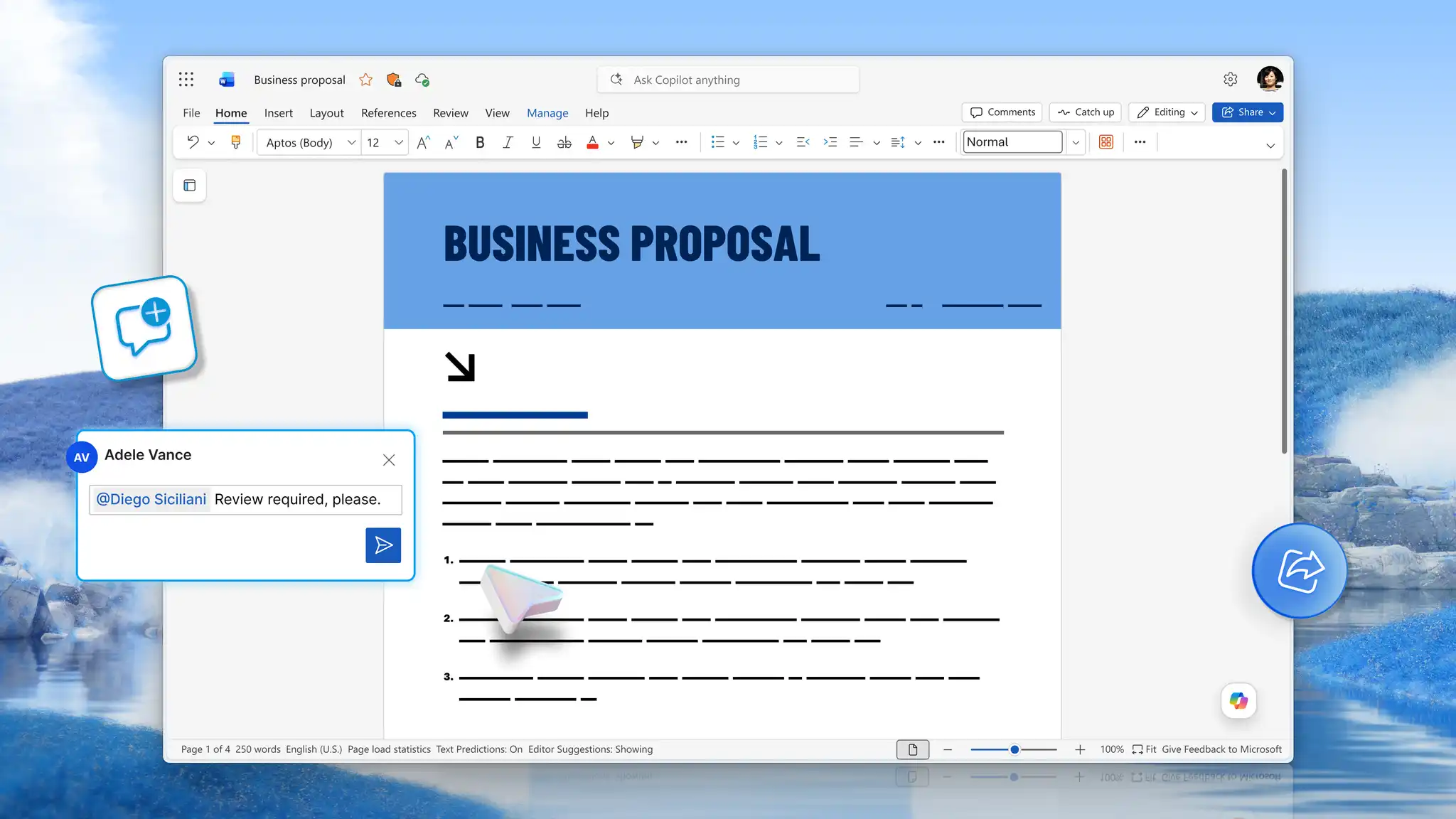
Effective business plans can assist with securing funding, applying for grants, or aligning teams around company goals. Microsoft Word helps organize financial projections, operational priorities, and long-term strategy all in one structured document. Generate professional business plans using pre-formatted templates, and draft or refine key sections like executive summaries or financial overviews with Copilot in Word.
Read on to learn how to prepare investor ready business plans, including choosing the right format, key components to include, and common mistakes to avoid.
When to write a business plan?
The correct time to write a business plan depends on the goal it is aiming to target. If a company is entering a new market or planning an expansion, draft a business plan with region‑specific strategies. When the goal is to hire new leadership, create a plan that highlights company values alongside strategy to help attract talent. For loan or grant applications, or investor pitches, bring together key information like employee contributions and financial projections in a single business plan.
How to choose the right business plan format
Traditional business plans
A traditional business plan is a detailed, structured document that outlines a company’s current operations and future strategies. From executive summaries to milestones, this format provides a comprehensive view of the business.
Use a traditional plan to present structured information that demonstrates preparedness and supports investor due diligence. It can also serve as a long‑term reference for internal stakeholders when creating training materials or technical documentation.
Lean business plans
A lean business plan is a one‑page document that provides a high‑level overview of a company’s objectives. It gives internal stakeholders a clear reference point for making quick, informed decisions.
Fast to create and revise, this format can help spark investor interest in early‑stage ideas and support both operational and financial planning by outlining key goals and next steps.
Key components of a business plan
A well-structured business plan helps investors, lenders, and partners quickly understand company visions and how to achieve them. Explore the key components of a business plan and how to format documents to include the most essential details below.
1. Executive summary
Give stakeholders a clear overview of a business idea in a one‑page summary to quickly understand goals. Start with a company mission and vision to explain why the business exists, followed by a value proposition that highlights what sets it apart. End with a brief summary of the problem addressed, the target customer, and the value the business delivers.
2. Company description
Provide a background on the business, along with its mission, history, and future goals in a condensed paragraph. In this space, outline measurable objectives using the SMART framework (specific, measurable, achievable, realistic, and time‑bound) to define how the business will adapt to market expansion.
3. Market research and target audience
Identify who the business is for and describe the characteristics of the primary audience to define target customers and persona in a concise manner. While defining the size of the market, focus on the segment most important to the business, clearly explaining the scale of the opportunity.
4. Competitive analysis
Compare top competitors including market leaders and local businesses to understand how they attract and retain customers using tables and charts. Data-rich information can be summarized into digestible insights with AI to help review pricing and sale strategies.
5. Products and services
Clearly state how the products or services meet customer needs, focusing on specific problems they solve in an extensive overview. Organize core benefits as practical bullet points using AI rewriter, helping investors, partners, or internal teams quickly identify opportunities. Conclude delivery models that support long-term competitive advantages.
6. Marketing and sales
Reference target markets and explain how the business will attract new customers and retain existing ones. Explore innovative marketing or advertising opportunities to help stakeholders evaluate launch and growth strategies.
7. Business financials
Summarize the financial outlook of the business using forecasts and balanced assumptions. Use tables and charts to frame projected revenues, expenses, and cash flow to show performance expectations. Base figures on the business model and market opportunity, to aid readers assess risk more confidently.
8. Management and leadership
In a single page, introduce the people responsible for delivering business goals, along with their skills and experience. Present the leadership team’s achievements as tangible outcomes, to build trust and credibility while pitching. Use flow charts to clearly outline team roles, reporting lines, and any planned hires, to acquaint investors with the workforce structure.
9. Funding requests
The business model gives readers realistic insights into how much capital the business needs to meet its objectives. Present a concise financial forecast that shows funding needs, expected returns, and repayment terms where applicable. Include both best‑case and worst‑case scenarios to provide transparency and help investors gain clarity on risk when evaluating the opportunity.
10. Appendix
Support business plans with relevant documents and references that add detail and credibility. Attach supporting materials such as certificates, licenses, patents, and other intellectual property to verify the claims made in the plan.

How to create a business plan in Microsoft Word
Save time on structuring and writing a business plan from scratch with professional, fully customizable templates in Word. Follow this step-by-step tutorial to build an impressive document that is ready to present.
In a browser, explore Word business plan templates.
Double click on the free business plan template you would like to use. Select a template that best suits business needs and goals.
Work with Copilot to draft key sections, replacing placeholder text and populating the template.
Once the copy is written, add a logo, headers, and other assets to customize the template according to brand guidelines.
Use document editor to proofread copy for grammar, spelling, and punctuation.
Gather stakeholder feedback to create a well-rounded business plan with collaboration tools in Word.
Save and share securely via Outlook or a shareable OneDrive link.
Tips for writing investor ready business plans
When pitching to investors, presenting plans with practical insights gives companies the competitive edge they need. Read on to find actionable tips that can help a plan stand out.
Starting with concise executive summaries: use AI summarizer to build short, scannable summaries that introduce investors to the core beliefs of a business. It gives investors clarity and confidence in the value the business brings.
Relying on data-driven market analysis: substantiate claims about the target market, strategies, and pricing structures with data-rich evidence from surveys and research. Investors take this as a sign of preparedness and a well‑thought‑out business model.
Using realistic financial forecasts: be sure to use numbers that showcase an attainable projected valuation and growth trajectory, and not those based on assumptions. Don’t forget to include room for surprise costs, showing strong financial discipline.
Outlining clear performance goals: define specific, measurable targets that align with the overall strategy and timeline. Focus on milestones that can be tracked and evaluated over time, rather than broad ambitions.
Four business plan mistakes to avoid
Attention to detail is what turns a good business plan into a memorable one. Below, find four of the most common mistakes made while drafting one.
Unrealistic revenue forecasts: using realistic projections showcases confidence and supports more focused investor conversations. Stick to proven numbers to strengthen credibility during pitching for funding.
Vague target audience definitions: stating just audience demographics provides only a partial view. Be sure to include psychographics and buying patterns, especially when building plans for market expansion.
Missing financial projections: outline profit and loss, cash flow, and balance sheet projections to make it easier for investors or internal stakeholders to analyze risk and financial viability.
Unstructured strategy sections: use a logical framework to clearly link goals, actions, and outcomes. Well-structured strategies support faster decision-making and easier operational planning.
How to use a business plan to manage and grow a brand
The most successful business plans are the ones that seamlessly adapt to market changes. Whether expanding operations, applying for grants, or securing funding, an effective plan should act as a guide for sustainable growth. Below, find key business plan functions that support long-term success.
Support performance tracking
Make sure plans define clear metrics and benchmarks that align with business objectives. This provides a consistent way to track financial and operational progress, making it easier to document results and review gaps between goals and performance.
Guide strategic decisions
Create plans that act as a reference for informed decision-making. Include frameworks, key assumptions, and recent updates to help teams assess options against the context and priorities outlined in the plan.
Evolve over time
Position plans as editable documents that stakeholders can easily revisit and refine using a secure link when priorities, data, and conditions change. Updating assumptions, timelines, and forecasts over time improves relevance as the business grows and matures.
Strengthen market alignment
Design plans that capture changes in customer needs, competition, and market conditions. Regular updates keep teams aware of current market realities, increasing preparedness.
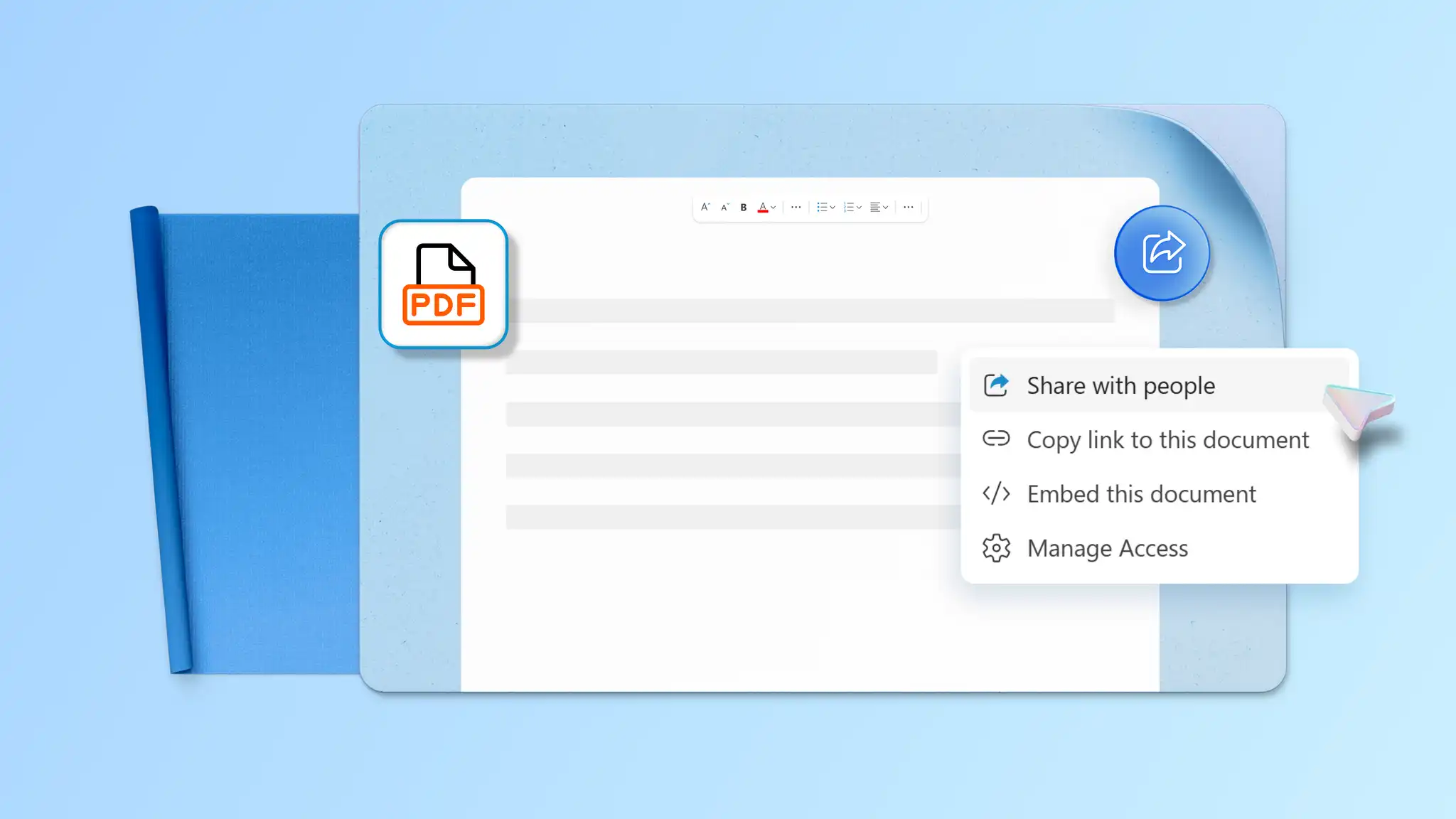
Build impactful business plans with these effective tips and professionally designed templates in Microsoft Word. Easily invite stakeholders to edit plans by sharing documents via a secure OneDrive link. Export a .docx file as a PDF to send to investors, then write a matching business letter to formalize a plan submission.
Frequently asked questions
- How to save a reusable business plan template in Microsoft Word?
Start with structuring a business plan in Word and proofreading it with document editor. Once the business plan is in place, in the File tab select Save As, choose Word Template (.dotx) as the file type, and store it in a templates folder. This allows the same business plan structure to be reused for future documents without recreating the layout each time. Save the file as a PDF for easy sharing with other stakeholders.
- What are the three C's of a business plan?
The three C’s of a business plan are company, customer, and competition. These elements explain what the business does, who it serves, and how it competes in the market. This structure appears in many business plan templates used for funding, proposals, and internal planning.
- What are the seven steps in a business plan?
A standard business plan typically includes an executive summary, company overview, market analysis, products or services, marketing and sales strategy, financial projections, and an operations plan. Many Word business templates follow this structure to keep plans clear and easy to review. After drafting, use AI rewriter to refine key sections, and document editor to proofread copy for spelling, grammar and punctuation.
- How to write a business plan for a loan?
A business plan for a loan should clearly outline financial projections, repayment assumptions, and risk factors. Lenders often look for detailed cash flow forecasts and realistic revenue estimates. Financial tables are often built using essential formulas in Microsoft Excel and referenced in Word, while narrative sections can be refined using AI rewriter to improve text clarity and flow.